
Aerotoxic Syndrome
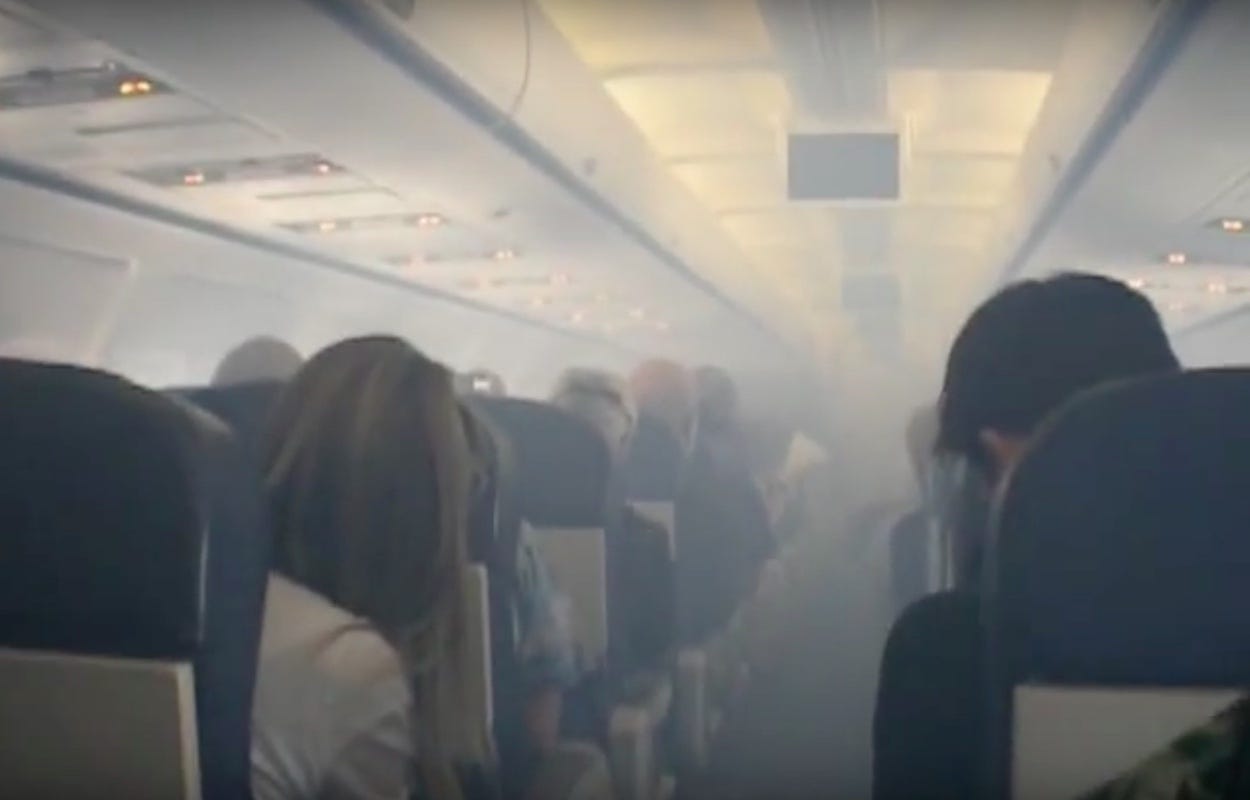
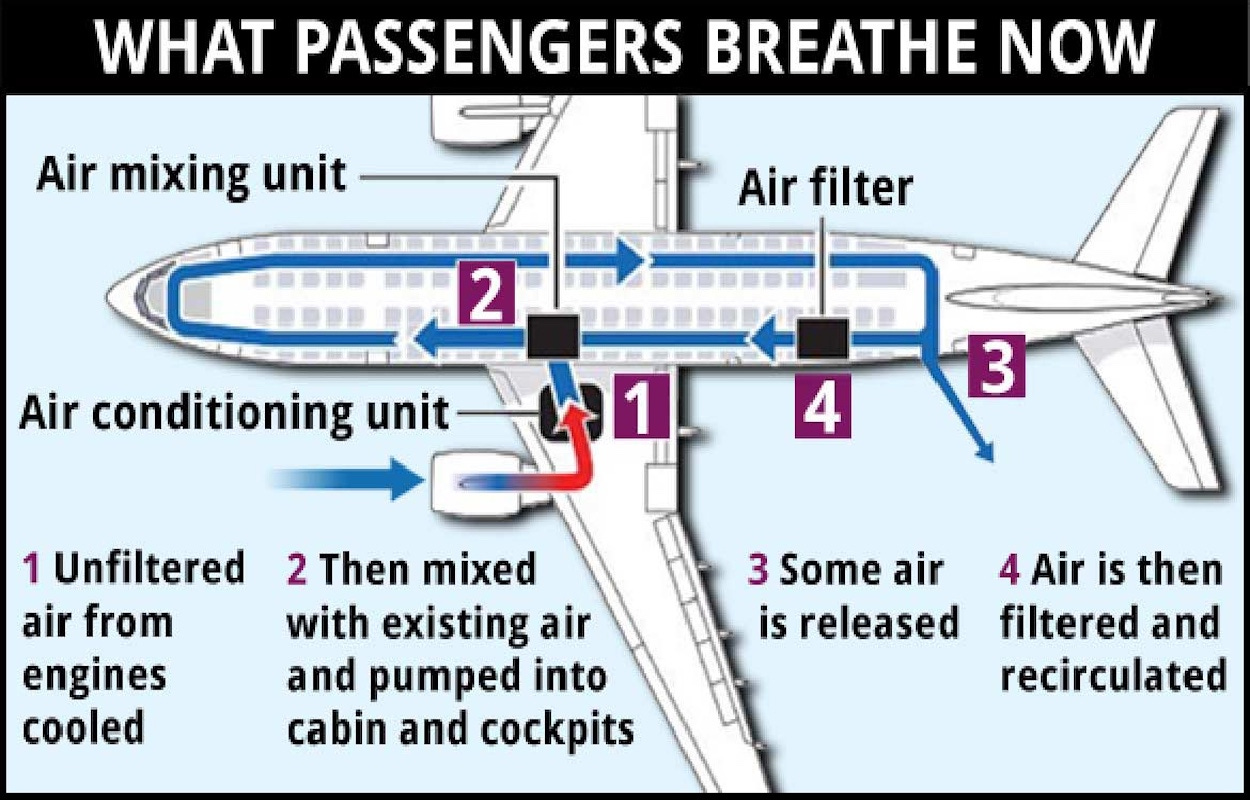
In the vast majority of jet aircraft, the outside air is actually routed through the engines, pressurized and then enters the cabin of the aircraft WITHOUT being filtered.

Please watch the interview below with Dr. Kevin Stillwagon:
https://rumble.com/v772lao-discussing-aerotoxic-syndrome-with-dr.-kevin-stillwagon.html

Aerotoxic syndrome refers to a range of acute and chronic health issues, including neurological, respiratory, and cognitive symptoms caused by breathing airplane cabin air contaminated by engine oils and hydraulic fluids (bleed air).
Aerotoxic syndrome is linked to “fume events” and, in some cases, can lead to long-term, disabling conditions for frequent flyers and crew. Unfortunately, the existence of “Aerotoxic Syndrome” as a specific medical diagnosis is still debated by some in the scientific and aviation communities.
The syndrome is attributed to contaminated bleed air, which is UNFILTERED engine-compressed air used to pressurize the cabin. If engine seals are faulty, engine oil and hydraulic fluid can enter this air supply.
“Fume events” are acute incidents where visible smoke or haze, accompanied by a distinct smell, enters the cabin, often causing immediate symptoms in passengers and crew. Contaminants often mentioned in these cases include organophosphates (OPs) and volatile organic compounds.
“Fume events” smell like dirty sweatsocks because heated jet engine oil, containing toxic additives like triarylphosphates (TCP), leaks into the cabin air supply via faulty seals, creating a foul, musty, or oily odor. This odor is caused by the thermal degradation of these lubricants and hydraulic fluids, often described as smelling like dirty socks, wet dog, or strong chemicals.
Acute, short-term symptoms occurring during or immediately after a flight include dizziness, severe headaches (migraines), nausea, confusion, vertigo, and eye/respiratory irritation.
Long-term effects from repeated exposure include chronic fatigue, cognitive impairment (”brain fog”), memory loss, depression, anxiety, tremors, and muscle/joint pain.
Aircrew (pilots and cabin crew) and frequent flyers are at the highest risk due to repeated exposure. Regulatory bodies estimate that some form of cabin air contamination (”fume events”) may happen on 0.2%–0.5% of flights, though many go unreported.
Symptoms often appear immediately, or can develop chronically from long-term exposure. It is generally considered an occupational issue for pilots and cabin crew, who have higher exposure levels compared to passengers.

A Solution?

Aerotoxic syndrome: What is that?
Commercial jet aircraft use air from the engines not only for propulsion purposes, but also to refresh the aircraft’s cabin air. This air is unfiltered when vented into the cabin. A small amount of oil generally leaks past the oil seals of the aircraft’s turbine engines. Tricresyl phosphate (TCP), an organophosphate compound, is released from that oil and ends up, along with metal shavings from the turbine blades, via the high pressure compressor, in the air destined for the cabin’s air conditioning. The flight crew and passengers inhale those burnt oil fumes as well as the toxic substances they contain.
Occasionally, a so-called ‘fume event’ occurs on board an aircraft. That is when more oil than usual suddenly leaks into the air, potentially causing, as the name indicates, a thin smoke screen to develop. This phenomenon occurs in one in roughly every 2000 flights, particularly during take-off and landing when more engine power is required.
Exposure to cabin air, whether polluted or not, is associated with certain health risks. This phenomenon is known as the aerotoxic syndrome, as explained in a recent article published by neurologist Gerard Hageman. The symptoms are diverse, consisting predominantly of fatigue and mild cognitive impairment.
Aerotoxic syndrome: diverse symptoms
Not everyone has symptoms; depending on the severity of the pollution and on the individual, the health effects may become apparent after just one flight or they may develop after repeated exposure to the harmful substances.
Symptoms related to aerotoxic syndrome include:
Memory impairment
Headaches
Dizziness
Nausea
Disorientation
Balance problems
Tightness in the chest
Breathing problems
Vomiting
Burnout symptoms
Shortness of breath
Fatigue
Coughing
Reduced vision
Palpitations
Lung irritation
Diarrhoea
Tinnitus (ringing in the ears)
Cognitive problems
Irritated eyes
Trembling
Increased heart rate
Cardiac arrhythmias
Trouble walking
Changed personality
Feeling of unease
Strong emotions and crying spells
Aerotoxic syndrome: how to prevent it
1. If you suffer from serious jet lag symptoms, i.e., aerotoxic syndrome, travel by other means than by plane.
2. Book flights on a Boeing 787 Dreamliner. This is currently the only plane that does not emit any toxic substances from the engines into the cabin.
3. Wear a special mask (P3 A2) in flight. This mask filters 95% of toxic substances from the air. Given that more toxic substances are vented into the cabin during take-off and landing, those are the times to wear a mask.
4. Drink bottled water - The drinking water system on board the aircraft is pressurised with the same contaminated air and is often treated with chemicals. So think twice about drinking coffee, tea and water. Preferably drink soft drinks, fruit juice or bottled water instead.
5. Have your symptoms diagnosed as soon as possible
If you repeatedly experience symptoms attributed to the aerotoxic syndrome, have them diagnosed within the shortest possible time frame.
https://www.fninstitute.com/en/complaints/brain-trauma/aerotoxic-syndrome

February 13, 2026
Forget About Chemtrails... The Real Toxic Exposure Is Inside the Cabin
Every modern jetliner except the Boeing 787 [which is equipped with a dedicated air inlet] supplies its cabin air by tapping directly into its engine compressors. That’s called “bleed‑air.” Sounds harmless until you realize those same compressors are lubricated with organophosphate‑loaded synthetic oils designed for turbines, not lungs.
When those seals inevitably leak — and they do — the hot oil turns into a chemical mist: tricresyl phosphate, aldehydes, carbon nanoparticles, and other industrial neurotoxicants. You breathe it. The crew breathes it. Everyone pretends it’s fine.
It’s not.
Independent laboratories have found these compounds in air filters, crew blood samples, and even in urine after fume events. The symptoms are textbook organophosphate poisoning: headaches, dizziness, nerve pain, brain fog, heart palpitations. For decades, airlines and regulators dismissed them as “psychological.” Sound familiar?
The fix is simple, but inconveniently expensive:
Monitor cabin air for organophosphates in real time.
Use non‑toxic oil formulations and improved seals.
Stop lying to the public about “brief odor incidents” or “dirty sock smells.”
https://drkevinstillwagon.substack.com/p/forget-about-chemtrails


February 12, 2026
France is the first country to definitively recognize, through a final judicial decision, a chronic pathology linked to repeated exposure to cabin air contaminants.
The Toulon Judicial Court (France) – Social Division, in a judgment delivered on December 19, 2025, ordered the recognition and coverage under occupational risk legislation of a pathology attributable to chronic exposure to aircraft engine oil fumes.
The certificate of non-appeal issued on February 5, 2026 renders this decision final and binding. This constitutes the first final judicial recognition worldwide of aerotoxic syndrome linked to chronic exposure, in the absence of an identified acute “fume event.”A Historic Judicial Decision
The Court recognized the existence of a direct and essential link between the professional activity of an airline pilot and:“Central and peripheral autoimmune neuropathy with demyelinating syndrome.”
Despite two successive unfavorable opinions issued by Regional Committees for the Recognition of Occupational Diseases (CRRMP), the Court held that:
occupational exposure to organophosphate compounds derived from engine oils was established;
metallic and chemical particles were found in the claimant’s body;
the chronology of symptom onset was consistent with occupational exposure;
no convincing alternative cause had been demonstrated;
the absence of an international scientific consensus does not prevent recognition of a causal link in a properly substantiated individual case.
The Primary Health Insurance Fund (CPAM) of the Var was ordered to recognize and cover the pathology under occupational disease legislation.Versions of the official decision can be downloaded in English, French, German, Italian, Portuguese, Spanish at the link below:
https://www.unfiltered.vip/avsa-court-ruling-as-is-occupational-disease.html

November 2015
Aircraft Cabin Bleed Air Contaminants: A Review
Quantification of the potential health risks associated with exposure to bleed-air contaminants in cabin air is not possible without broad identification and measurement of the representative hazardous constituents of bleed air during contaminated air events. Included in the 2012 mandate (Public Law 112-95) is the directive to the FAA to “assess bleed air quality on the full range of commercial aircraft operating in the United States.” Carrying out such a mandate requires adequate funding to support research activities.
May 16, 2023
Health consequences of exposure to aircraft contaminated air and fume events: a narrative review and medical protocol for the investigation of exposed aircrew and passengers
Thermally degraded engine oil and hydraulic fluid fumes contaminating aircraft cabin air conditioning systems have been well documented since the 1950s. Whilst organophosphates have been the main subject of interest, oil and hydraulic fumes in the air supply also contain ultrafine particles, numerous volatile organic hydrocarbons and thermally degraded products.
Inhalation of these potentially toxic fumes is increasingly recognised to cause acute and long-term neurological, respiratory, cardiological and other symptoms. Cumulative exposure to regular small doses of toxic fumes is potentially damaging to health and may be exacerbated by a single higher-level exposure. Assessment is complex because of the limitations of considering the toxicity of individual substances in complex heated mixtures.
There is a need for a systematic and consistent approach to diagnosis and treatment of persons who have been exposed to toxic fumes in aircraft cabins. The medical protocol presented in this paper has been written by internationally recognised experts and presents a consensus approach to the recognition, investigation and management of persons suffering from the toxic effects of inhaling thermally degraded engine oil and other fluids contaminating the air conditioning systems in aircraft, and includes actions and investigations for in-flight, immediately post-flight and late subsequent follow up.

June 12, 2015
Cognitive impairment and associated loss in brain white microstructure in aircrew members exposed to engine oil fumes
In aircrew we found significantly more self-reported cognitive complaints and depressive symptoms, and a higher number of tests scored in the impaired range compared to the control group. We observed small clusters in the brain in which white matter microstructure was affected. Also, we observed higher cerebral perfusion values in the left occipital cortex, and reduced brain activation on a functional MRI executive function task. The extent of cognitive impairment was strongly associated with white matter integrity, but extent of estimated number of flight hours was not associated with cognitive impairment nor with reductions in white matter microstructure. Defects in brain white matter microstructure and cerebral perfusion are potential neurobiological substrates for cognitive impairments and mood deficits reported in aircrew.


https://www.facebook.com/afacwa/videos/exposure-to-toxic-air-on-aircraft/1293812328964847/

Aerotoxic Syndrome—Susceptibility and Recovery
Significant numbers of aircrew and jet airline passengers are affected by post-flight symptoms of ill health, usually nowadays labelled “aerotoxic syndrome”. It could be inferred from a large passenger survey carried out in the Netherlands that up to 50% of flights may engender malaise to varying degrees, and up to 50% of the population might be susceptible to suffering from actual intoxication from the contaminants known to occur in aircraft cabin air. In-flight measurements of its composition have revealed the presence of known neurotoxins, notably tricresyl phosphate and carbon monoxide, both of which can enter the cabin air as it is bled off the main engines.
The continuing exponential growth of air passenger traffic means that cabin air contamination will eventually become a major public health hazard if effective action is not taken

Canadian Union of Public Employees - Onboard Fume Events
What are the hazards of “bleed” air?
Bleed air is supposed to be fresh, clean, air taken from the compressor section of the engine before it is mixed with fuel or exhaust gasses. However, it isn’t always “clean.”
Synthetic lubricants with special heat-resistant additives are used to keep moving parts in a jet engine at a cool operating temperature. If there is a malfunction, the lubricating oil or other chemicals such as de-icing fluid can be pulled into the bleed air and fed directly into the aircraft cabin. Even engines under the strictest of maintenance schedules can malfunction or break down. Additionally, the seals inside engines can lead to low doses of exposure because of the way many of them are designed.
At elevated temperatures, such as those found inside a jet turbine, the additives in these products can degrade and become converted into a fine mist or fumes that becomes part of the air in the cabin. There is no filtration equipment currently onboard standard commercial aircraft designed to remove these toxic fumes before or after they enter the cabin.
It has been known for more than 60 years that the malfunctioning of an engine can introduce unwanted chemicals into the cabin and result in acute exposure. This is commonly known as a “fume event.” A recent World Health Organization publication breaks down all the different chemicals that are in an engine before the combustion chamber.
“Turbine engines utilize synthetic lubricants that generally include an ester base stock (95%), a wide variety of triaryl phosphates (TAPs), organophosphate (OP) anti-wear additives (around 3%), amine antioxidants and proprietary ingredients (1–2%). The commercial formulation of the OP additive is generally cited as tricresol phosphate (TCP). Exposure of such substances to extreme temperatures generates a large number of pyrolyzed [decomposed through heating] compounds and hydrocarbons. Hydraulic fluids are made up primarily of tributyl phosphates (TBPs) and triphenyl phosphates, while de-icing fluids consist of ethylene and propyl glycols.”

September 26, 2017
Aerotoxic Syndrome – A Hazard of Airline Travel
Aerotoxic Syndrome is caused by the inhalation of contaminated airline cabin air that is caused by “bleed air” and other fumes entering the aircraft cabin air supply. Bleed air contamination has been recognized since the introduction of the bleed air system in the 1950s and is still a health hazard today. With the exception of the Boeing 787, today’s aircraft all use the bleed air system to provide cabin ventilation. Commercial airlines routinely pump or “bleed” compressed air from airline engines to cabins where crew members inhale this unfiltered air that is contaminated with pyrolized hydraulic fluids and synthetic jet engine fuels. The contamination includes a neurotoxic organophosphate by product. A small 2016 study by Reneman et al 2016 demonstrated that cognitive impairment in the participating aircrew was directly associated with the number of airline flights and the extent of compromised integrity of brain white matter.
https://naturalhealthresearch.org/aerotoxic-syndrome-a-hazard-of-airline-travel/

LEGAL ACTIONS
Aerotoxic Syndrome Lawsuit: Airplane Toxic Exposure
https://personalinjurylawcal.com/aerotoxic-syndrome/
Toxic cabin air
https://www.unitelegalservices.org/services/toxic-cabin-air

The following articles are only available to those who subscribe to the Wall Street Journal:
Wall Street Journal
September 13, 2025
Toxic Fumes Are Leaking Into Airplanes, Sickening Crews and Passengers
https://www.wsj.com/business/airlines/air-travel-toxic-fumes-64839d6e
September 14, 2025
What You Need to Know About Fume Events on Airplanes
https://www.wsj.com/business/airlines/what-you-need-to-know-about-fume-events-on-airplanes-e79138c6
September 23, 2025
The Airline Industry Has a Toxic Fume Problem
December 21, 2025
‘He Was Poisoned.’ Toxic Fumes on Planes Blamed for Deaths of Pilots and Crew
https://www.wsj.com/business/airlines/toxic-fumes-airplane-pilot-crew-death-739fa3bb
December 22, 2025
Why Toxic Fumes on Planes Are Being Blamed for Illnesses and Deaths
December 22, 2025
I’m Worried About Toxic Fumes on My Upcoming Flight—What Can I Do?



If you would like to have a respectful discussion regarding this issue and help work on possible solutions, then please feel free to contact me directly anytime at 310-619-3055 (phone, text, Signal, Telegram or WhatsApp) or James.Roguski@gmail.com

James Roguski
310-619-3055
My Story

JamesRoguski.substack.com/archive
All support is deeply appreciated.
CLICK HERE TO DONATE

I was an airline pilot for 30 years. The air being routed into the cabin and cockpit bypasses the combustion section of the engine. Once you get above the haze layer or above about 10,000' you will not find cleaner air anywhere. That's what you're breathing for nearly the entire flight.
If you've ever flown into someplace warm and humid, like Miami, you've probably noticed that as you descend below the scattered cumulus clouds you start to feel the humidity and smell the vegetation. That's because you're breathing outside air that's continually fed into the cabin. It's absolutely untrue that the air is unfiltered: It's fed through HEPA filters that filter out 99.97% of particulates. The entire pressure vessel is refreshed about every 2-3 minutes, so there's no "stale" air. It's clean, continually refreshed air from the atmosphere that hasn't touched anything except the ducting that routes it to the cabin. Some of it is recirculated from the cabin, but it's still "new" every 2-3 minutes because the air is constantly discharged through the outflow valves to maintain the cabin pressure. It's cleaner than what's in your house and car and what you're exposed to at your job. It smells sometimes? Yeah, because condensation created as bleed air pressure is reduced is added back in before the air goes into the cabin so people don't complain about how dry the air is. That humidified air can have an odor for the same reason a humidifier does. And oil doesn't "generally" leak into the air. That's ridiculous. It happens rarely. The last thing the airlines want is to lose operating fluids through bad seals. That list of alleged symptoms is ridiculous, too. "Strong emotions and crying spells"? Seriously? Is that why you see people constantly bawling as they drive around? Because they're breathing way more unfiltered oil in traffic than they are in airplanes. And "burnout symptoms" being listed as a consequence should get the whole idea dismissed as a joke.
If crews were at the greatest risk then after 30 years of that I should be dead, or beset with respiratory ailments, strong emotions, and crying spells. I'm not, because the air doesn't get any cleaner than it does when it's pulled in from 30,000'. In fact, I flew for a cargo airline that was usually in no hurry to load the airplanes, so we'd sit there typically at least 30 minutes past departure time sucking diesel fumes from the loaders and tugs. Even after that much exposure, five nights a week for 26 weeks a year, I can't check off one item on that list of alleged symptoms. So everybody can stop panicking about the extremely rare occasions when "fume events" happen. In 30 years and 17,000 hours of flying, I never saw one, and a single exposure is far less than you get cumulatively from driving around with the fresh air intake open or the windows down on your car.
Wonderful work James . Thank you.