
STOP THIS NOW!!!
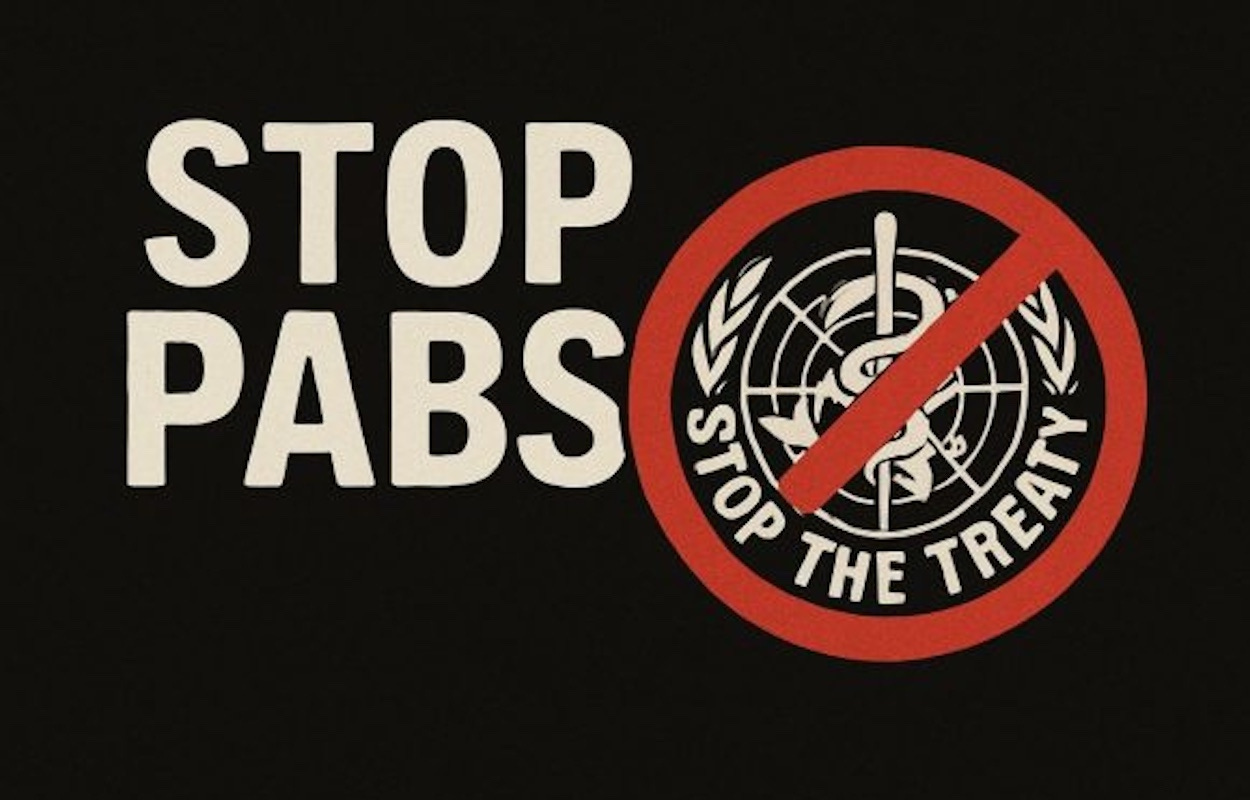
THE TIME TO SPEAK UP against the negotiations for the Pathogen Access and Benefit Sharing (PABS) System Annex to the WHO Pandemic Agreement IS RIGHT NOW.


The draft, which promotes greater legal uncertainty, is weak in benefit-sharing, and effectively normalises biopiracy, should be of serious concern to developing countries.
Sangeeta Shashikant and Nithin Ramakrishnan
If you live in the United States or Argentina, and you somehow believe that these PABS negotiations no longer matter to you, you are sadly mistaken.
For those few people around the world who still care about this issue, there is a lot of information contained in this article. Feel free to contact me directly anytime via phone, text, Signal, Telegram or WhatsApp at 310-619-3055 if you have any questions.
Please watch the 3 minute video below:

The final round of scheduled negotiations for the PABS Annex to the WHO Pandemic Agreement are scheduled for March 23-28, 2026:
https://apps.who.int/gb/IGWG/e/e_igwg6.html

The 79th World Health Assembly is scheduled for May 18-23, 2026:
https://www.who.int/about/governance/world-health-assembly
Below is the most recent (March 9, 2026) draft of the PABS Annex:
DRAFT
Annex (IGWG Bureau 9 March 2026)
Per the report of IGWG5, the IGWG requested the Bureau to present proposals for sections of texts for the draft PABS Annex, in advance of the sixth meeting of the IGWG, building upon the on-screen text and discussions at the fifth meeting. Highlighting in the text follows the conventions used in the IGWG.
WHO Pathogen Access and Benefit-Sharing System (“PABS System”)
I. Scope, objectives and use of terms
A. Scope and objectives
Recognizing the sovereign right of States over their biological resources and the importance of collective action to mitigate public health risks, and underscoring the importance of promoting the rapid and timely sharing of “materials and sequence information on pathogens with pandemic potential” (hereinafter “PABS Materials and Sequence Information”) and, on an equal footing, the rapid, timely, fair and equitable sharing of benefits arising from the sharing and/or utilization of PABS Materials and Sequence Information for public health purposes, the Parties hereby operationalize the multilateral system for safe, transparent, and accountable access and benefit-sharing for PABS Materials and Sequence Information, the “WHO Pathogen Access and Benefit-Sharing System” (hereinafter the “PABS System”). This Annex sets out the provisions governing the PABS System established in Article 12 of the WHO Pandemic Agreement.
B. Use of terms
For the purposes of this Annex:
(a) “Pathogen with pandemic potential” means any pathogen that has both the potential for sustained transmission in humans and the capacity to cause a pandemic emergency as defined in Article 1(c) of the WHO Pandemic Agreement.
(b) “PABS Materials and Sequence Information” means respectively: (i) any biological material, including but not limited to DNA, RNA, proteins and metabolites when available, from a pathogen with pandemic potential; and (ii) genomic information generated from a pathogen with pandemic potential.
(c) “Participating Manufacturer” means an entity, including a developer, that manufactures vaccines, therapeutics and/or diagnostics, including by means of licensing agreements, and that has entered into a legally binding WHO PABS Contract.
II. Implementation of the PABS System
A. Operation of the PABS System
1. The operation of the PABS System rests on two pillars: the rapid and timely sharing of PABS Materials and Sequence Information, and, on an equal footing, the rapid, timely, fair and equitable sharing of benefits, both monetary and non-monetary, including annual monetary contributions, vaccines, therapeutics and diagnostics arising from the sharing and/or utilization of PABS Materials and Sequence Information for public health purposes.
2. All elements of the PABS System shall come into operation simultaneously, in accordance with this Annex.
3. Each Party, in the implementation of the PABS System, shall respect and comply with applicable international law, and with applicable national and/or domestic law, regulations and standards related to risk assessment, biosafety, biosecurity and export control of pathogens, and data protection.
4. In the implementation of the PABS System, the Parties shall recognize and respect the traditional knowledge of Indigenous Peoples and of local communities, including traditional medicine, with regard to PABS Materials and Sequence Information.
5. The participants of the PABS System include, inter alia:
(a) laboratories that have agreed to terms and conditions of the WHO Coordinated Laboratory Network for sharing of PABS Materials and Sequence Information (hereinafter WCLN);
(b) databases that have agreed to terms and conditions for WHO recognized sequence databases for sharing of PABS Sequence Information;
(c) entities utilizing PABS Materials and Sequence Information for commercial purposes that have entered into legally binding WHO PABS Contracts; and
(d) individuals or entities utilizing PABS Materials and Sequence Information for non-commercial purposes that have agreed to terms and conditions.
6. All participants of the PABS System shall:
(a) use PABS Materials and Sequence Information solely for the purpose of pandemic prevention, preparedness and response;
(b) comply with applicable benefit sharing obligations as described in Section C;
(c) comply with applicable provisions regarding onward transfer of PABS Materials and the sharing of PABS Sequence Information;
(d) handle PABS Materials and Sequence Information in accordance with applicable international law and with applicable national and/or domestic law, regulations and standards related to risk assessment, biosafety, biosecurity and export control of pathogens, and data protection;
(e) appropriately acknowledge:
(i) use of PABS Materials and Sequence Information in presentations and publications; and
(ii) the contributions of collaborators, including laboratories/countries providing PABS Materials and Sequence Information; and
(f) not claim any intellectual property rights over PABS Materials and Sequence Information, or their genetic parts or components, in the form received from the PABS System.
7. In accordance with Article 12, each Party shall review and, as it deems appropriate, align its national and/or regional access and benefit sharing measures applicable to PABS Materials and Sequence Information within the scope of this Annex, so that measures that are contrary to, or inconsistent with, or duplicative of, this Annex will not be applied upon entry into operation of all elements of the PABS System. Participating Manufacturers and other entities that comply with WHO PABS Contracts shall not be subject to additional benefit sharing measures with respect to matters covered by such contracts. Entities using PABS Materials and Sequence Information for purposes beyond the scope of the PABS System shall be subject to applicable law on access and benefit-sharing.
B. Access to PABS Materials and Sequence Information
1. Each Party, upon identification of a pathogen with pandemic potential and initial national risk assessment, shall:
(a) through a laboratory or laboratories authorized under relevant national or domestic procedures:
i. share PABS Materials, as soon as available, on a priority basis, with one or more WCLN laboratories of the Party’s choice, and notify WHO thereof;
ii. upload PABS Sequence Information, as soon as available, on a priority basis, to one or more WHO recognized sequence databases of the Party’s choice; and
iii. ensure that a unique persistent identifier is assigned and attached to each PABS Material and Sequence Information;
(b) agree to onward transfer and use of PABS Materials and Sequence Information, in line with the applicable terms and conditions;
(c) provide, as soon as available, accurate and sufficiently detailed public health information, clinical and epidemiological information, as well as metadata needed for risk assessment, and continue to share the aforesaid in the event additional information becomes available; and
(d) take appropriate measures, in accordance with national legislation and, where applicable, international obligations, to ensure that traditional knowledge of Indigenous Peoples and of local communities regarding PABS Materials and Sequence Information, including traditional medicine, shall be accessed with the prior and informed consent or approval and involvement of the concerned Indigenous Peoples and of local communities, and under mutually agreed terms.
2. The terms and conditions applicable to laboratories within the WCLN shall require those laboratories to, inter alia:
(a) have the necessary facilities, equipment and personnel, and meet required relevant international and national biosafety and biosecurity levels and standards necessary to safely handle pathogens with pandemic potential;
(b) ensure that a unique persistent identifier is retained for each PABS Material, and, where applicable, each PABS Sequence Information, including for purposes of onward transfers;
(c) ensure that, through the relevant material transfer agreement and/or notice of shipment, onward transfers of PABS Materials outside the WCLN are subject to the requirements in Section A.6 and the recipient’s commitment to enter into a WHO PABS Contract or agree to terms and conditions as described in Section C.1, C.2, or C.3, as applicable;
(d) notify WHO of onward transfers of PABS Materials, both within and outside the WCLN.
(e) upon request, engage scientists from originating laboratories, especially those from developing countries, in scientific projects associated with research on PABS Material and Sequence Information, and seek to ensure their co-authorship in the preparation of manuscripts for presentation and publication, according to best practices for scientific publications; and
(f) share relevant results and analyses with WHO and the Party providing PABS Materials and Sequence Information in a timely manner.
3. The terms and conditions applicable to WHO recognized sequence databases for sharing of PABS Sequence Information shall require those databases to, inter alia:
(a) ensure their governance practices and terms of use are transparent and publicly accessible, including for the participants of the PABS System;
(b) comply with their own policies regarding onward sharing of PABS Sequence Information;
(c) support the rapid upload and availability of PABS Sequence Information and provide access thereto free of charge;
(d) apply appropriate information security policies and practices and quality standards, including to enable reliable identification of PABS Sequence Information over time and to support interoperability;
(e) ensure that a unique persistent identifier is assigned, attached and retained for each PABS Sequence Information;
(f) enable the reporting of and preserve information on data provenance, including the country of origin and laboratory which generated the PABS Sequence Information;
(g) notify users of the requirements in Section A.6, and that utilization of PABS Sequence Information entails commitment to enter into a WHO PABS Contract or agree to terms and conditions as described in Section C.1, C.2, and C.3, as applicable;
(h) provide records of PABS Sequence Information to WHO, upon request, to be referenced in tools to support implementation of the PABS System; and
(i) notify users that failure to comply with the applicable terms and conditions and/or WHO PABS Contract may result in denial, suspension or termination of access to PABS Sequence Information, where applicable.
C. PABS System benefit-sharing
1. WHO PABS Contracts for Participating Manufacturers shall include, inter alia, the following obligations:
(a) In the event of a pandemic emergency, in accordance with Article 12.6, each Participating Manufacturer shall make available to WHO rapid access targeting twenty per cent (20%) of its real-time production of safe, quality and effective vaccines, therapeutics and diagnostics for the pathogen causing the pandemic emergency, provided that:
i. a minimum threshold of ten per cent (10%) of its real-time production is made available to WHO as a donation; and
ii. the remaining percentage, with flexibility based on the nature and capacity of each Participating Manufacturer, is reserved at affordable prices to WHO.
(b) In the event of a public health emergency of international concern, in accordance with Article 12.7, Participating Manufacturers shall implement benefit-sharing provisions, including options regarding access to safe, quality and effective vaccines, therapeutics, and diagnostics for the pathogen causing the public health emergency of international concern, such as agreeing to provide, where available, promptly and on a priority basis to WHO on its request, such products at affordable prices, based on needs assessed by WHO.
(c) In addition to the above benefits, Participating Manufacturers, in accordance with Articles 12.5 and 12.8, shall:
i. provide monetary benefits, including annual monetary contributions based on objective, transparent and measurable criteria, and taking into account their use of PABS Materials and Sequence Information as well as their nature and capacity;
ii. based on their nature, capacity and use of PABS Materials and Sequence Information, commit to at least two of the following options:
1. capacity-building and technical assistance;
2. research and development cooperation;
3. facilitating rapid access to available vaccines, therapeutics and diagnostics with a view to responding to public health risks and events in the context of Article 13.3 of the International Health Regulations (2005);
4. granting of non-exclusive licenses to manufacturers in developing countries for the effective production and delivery of vaccines, therapeutics and diagnostics;
5. other forms of technology transfer as mutually agreed, including the transfer of relevant knowledge, skills and technical expertise.
2. WHO PABS Contracts for other entities utilizing PABS Materials and Sequence Information for commercial purposes, including developers that do not manufacture vaccines, therapeutics or diagnostics, shall, in accordance with Articles 12.5 and 12.8, include, inter alia, obligations for such entities to:
(a) provide monetary benefits, including annual monetary contributions based on objective, transparent and measurable criteria, and taking into account their use of PABS Materials and Sequence Information, as well as their nature and capacity;
(b) based on their nature, capacity and use of PABS Materials and Sequence Information, commit to at least one of the following options:
i. capacity-building and technical assistance;
ii. research and development cooperation;
iii. facilitating rapid access to available pandemic-related health products with a view to responding to public health risks and events in the context of Article 13.3 of the International Health Regulations (2005);
iv. granting of non-exclusive licenses to manufacturers in developing countries for the effective production and delivery of vaccines, therapeutics and diagnostics; v. other forms of technology transfer as mutually agreed, including the transfer of relevant knowledge, skills and technical expertise.
3. Applicable terms and conditions for entities using PABS Materials and Sequence Information for noncommercial purposes shall include, inter alia, obligations to:
(a) engage scientists from originating labs, especially those from developing countries, in scientific projects associated with research and development on PABS Material and Sequence Information, and seek to ensure their co-authorship in preparation of manuscripts for presentation and publication, promoting broad and free access;
(b) based on their nature and capacity, consider options for:
i. conducting risk analysis and assessment and outbreak forecasting;
ii. capacity-building and technical assistance;
iii. research and development cooperation;
iv. monetary benefits; and
(c) inform WHO, and enter into a WHO PABS Contract as appropriate, in the event they intend to utilize PABS Materials and Sequence Information for commercial purposes.
III. Governance and review of the PABS System
A. Governance
1. The Conference of the Parties shall oversee implementation of the PABS System. In support of this function, a subsidiary body to be known as the PABS Advisory Group is hereby established and shall operate in a manner consistent with the WHO Regulations for expert Advisory Panels and Committees. The Conference of the Parties shall approve at its first session terms of reference for the PABS Advisory Group and modalities for its operationalization and governance.
2. The PABS Advisory Group shall, inter alia, provide technical guidance and evidence-based recommendations to facilitate the implementation and operation of the PABS System and report to the Conference of Parties, through the Director-General, on operational and technical matters related to the PABS Annex.
3. The Secretariat of the World Health Organization, as Secretariat of the WHO Pandemic Agreement pursuant to Article 22 thereof, shall, inter alia, for the purposes of implementation of this Annex:
(a) in accordance with all relevant provisions of the WHO Pandemic Agreement, administer and coordinate the PABS System under the guidance of the Conference of the Parties, and regularly report to the Conference of the Parties on the operations of the PABS System;
(b) for the purposes of the coordination and operation of the PABS System, collaborate with relevant international organizations and relevant stakeholders;
(c) operationalise the WCLN and the recognition of databases for sharing PABS Sequence Information according to the requirements set out in Section II.B of this Annex;
(d) enter into WHO PABS Contracts and agree terms and conditions according to the requirements set out in Section II.C of this Annex;
(e) mobilize and facilitate technical assistance to Parties, upon request, and collaborate to strengthen required capacities, especially in developing countries; and
(f) establish a platform to provide visibility on operational progress, including, inter alia, lists of laboratories authorized under relevant national or domestic procedures, laboratories that are part of the WCLN, WHO recognized databases for sharing PABS Sequence Information, concluded WHO PABS Contracts and terms and conditions, and the implementation of monetary and nonmonetary benefit sharing.
4. Any Party may bring any allegation of non-compliance by an institution or laboratory in the WCLN or a WHO recognized sequence database with the applicable terms and conditions to the attention of the WHO Director-General, who will review the circumstances and may discuss the matter with the PABS Advisory Group to determine appropriate action(s) to be taken, including where appropriate the consideration of suspending or revoking the WHO designation/recognition of that entity. Any allegation of noncompliance with, or breach of, WHO PABS Contracts shall be addressed in accordance with the relevant terms of those contracts, and the Director-General shall report to the Conference of the Parties regarding any such allegations.
B. Review of the PABS System
The Conference of the Parties shall review the PABS System, with a view to ensuring its effective implementation, operations and functioning, no later than five years after entry into force of the WHO Pandemic Agreement and thereafter every five years. In addition, the Conference of the Parties may also conduct extra-ordinary reviews of the PABS System, as it deems appropriate.


ADDITIONAL INFORMATION:

March 19, 2026
Latest WHO PABS Text: A Blueprint for Biopiracy?

March 18, 2026
Pressure Builds as Pandemic Agreement Talks Reach Final Week With Little Consensus

March 16, 2026
PABS Explained

March 14, 2026


March 12, 2026
Anonymous Access to PABS Sequence Information: Open Access or Open Exploitation?

March 12, 2026
WHO: Bureau PABS Text Only Accommodates EU’s Unreasonable Demands, Promoting Biopiracy
The draft, which promotes greater legal uncertainty, is weak in benefit-sharing, and effectively normalises biopiracy, should be of serious concern to developing countries.
March 11, 2026
Designing the PABS System: Contracts, IP and the Equity Test

March 10, 2026
“The Elders” urge progress on Pathogen Access and Benefit Sharing Annex to secure a fair pandemic deal
March 2, 2026
The Battle for an Equitable and Accountable PABS System

February 24. 2026
EU & Allies in PABS Negotiation: Promoting Innovation or Undermining the Right to Science & Equity?

February 20, 2026
WHO: EU Backtracks on Pandemic Agreement commitments, Ignores Evidence & Precedents
https://twn.my/title2/health.info/2026/hi260204.htm
February 13, 2026
WHO: Document reveals questionable practices in pathogen-sharing arrangements in WHO-managed networks
https://twn.my/title2/health.info/2026/hi260203.htm
February 13, 2026
PABS: South seeks stronger text on contracts, data governance, benefit sharing
https://twn.my/title2/health.info/2026/hi260202.htm
February 9, 2026
Powerful WHO Members Hint at Delay in Pandemic Talks if No Legal Certainty on Pathogen Information
January 30, 2026
PABS Negotiations at a Crossroads

January 12, 2026

December 1, 2025

November 3, 2025
PABS could enable biopiracy & promote inequity, alerts TWN

October 30, 2025
Centring Equity in the PABS Annex

October 15, 2026


September 6, 2025

August 23, 2025
WHY THE WORLD SHOULD OPPOSE THE WHO PATHOGEN ACCESS AND BENEFIT SHARING SYSTEM



If you would like to have a respectful discussion regarding this issue and help work on possible solutions, then please feel free to contact me directly anytime at 310-619-3055 (phone, text, Signal, Telegram or WhatsApp) or James.Roguski@gmail.com

James Roguski
310-619-3055
My Story

JamesRoguski.substack.com/archive
All support is deeply appreciated.
CLICK HERE TO DONATE

Hi James. Who is still listening to this terrororganization WHO? There are no elected people there they bougth themselves in. Bill Gates owns WHO was the last i heard about them. So this lunatic calling himself humaitarian got his own global organization were he can force membercountrys to take all the insane vaccines they can come up with. How is this possible? He was working together with Fauci in the 1980ies on the aidsvaccine they developed. The ones who took the vaccine got aids. And everything inside american healthcare has gone downhill since! Anthony Fauci, Bill Gates and Jeffrey Epstein made the covid19 vaccines and used Pfizer and Moderna to sell it. That's why there was this clause on accountability for the pharmas! They didn't invent the vaccine they just produced it and sold it! The inventors are Fauci, Gates and Epstein! It's in the files!
And now they have come up with this PABS idea wich clearly will not benefit others than the ones who profits from it!
So you got my voice against this!
Regards
Bjørn Leif-oscar Liptovari
I am fed up of being pharmed. The clothes we wear, the perfumes and cosmetics, the air we breathe, the water we drink and the food we eat etc... it's all poison. And as if that's not enough, on top of that, we are constantly experimented on and coerced to have vaccines and medications. We are electrical beings, filled with light, spirituality and promise. They are making sure that we do not shine. This HAS TO STOP.