


THE SLIPPERY SLOPE:
Instead of prohibiting or banning “geoengineering,“ should we allow organizations and corporations to lobby for “governance” and “regulations” that are designed to lead to the “oversight” of “testing” that would ultimately lead to the deployment of various methods of solar radiation modification designed to block the sun?

Dear Reader,
If you support “solar radiation modification” or “blocking the sun” as a means to “cool the planet,” then please call me directly at 310-619-3055 so that you can give me some insight into the inner workings of your mind.
What in the world are you thinking?
I encourage you to read my previous articles:
Defend Your Right To Natural Sunshine
The Unalienable Right to Natural Sunshine and Its Importance to the Pursuit of Happiness
Interview with Robert Scott Bell
The Gaping Loophole in U.S. Federal Law Regarding Weather Modification Reporting
Nearly Every Nation on Earth Agreed to a Moratorium on Geoengineering in 2010
However, if you agree with me that “blocking the sun” in order to “cool the planet” should be PROHIBITED by law, then I also encourage you call me at 310-619-3055 to discuss how we can collaborate to achieve our mutual goals.
Please consider this to be a personal invitation from me to you to join the worldwide movement to Defend Your Right To Natural Sunshine.
JOIN THE MOVEMENT:
CLICK HERE IF YOU LIVE IN THE U.S.
CLICK HERE IF YOU LIVE OUTSIDE THE U.S.
“There is no single geoengineering approach that currently meets basic criteria for effectiveness, safety and affordability.”

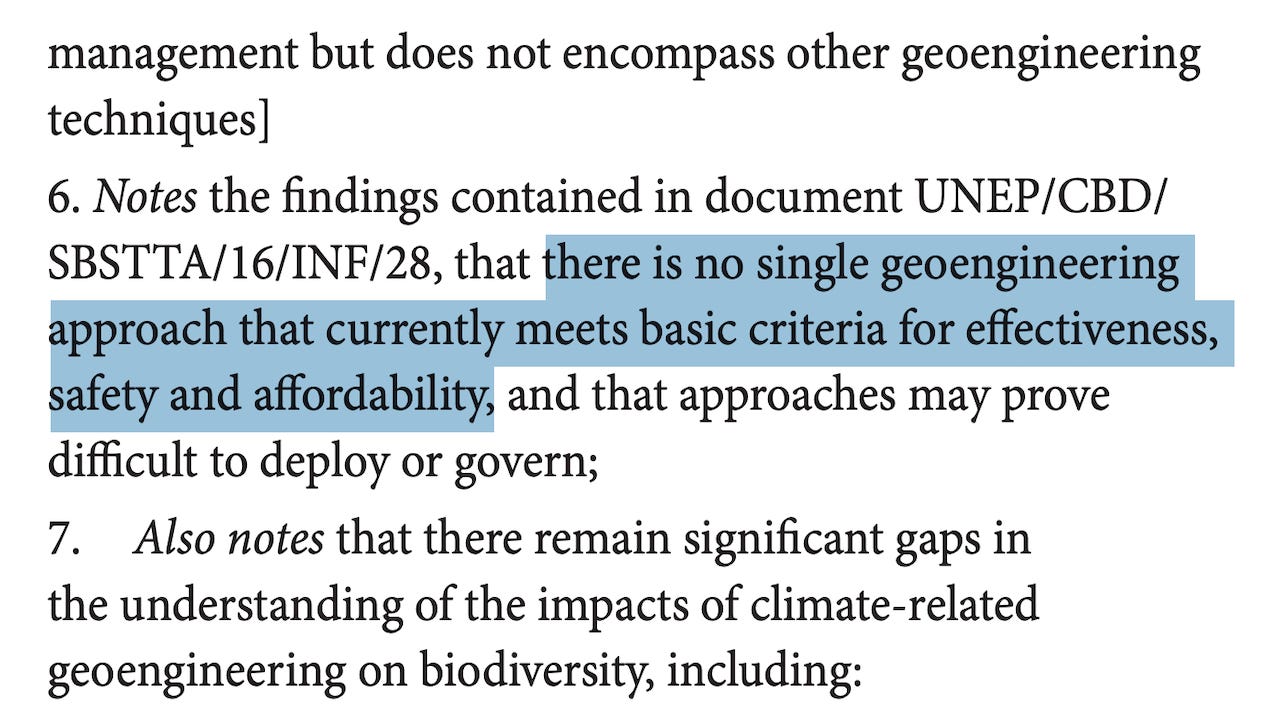
https://www.cbd.int/doc/publications/cbd-ts-84-en.pdf (page 19)

FALLACIOUS ARGUMENTS IN FAVOR OF BLOCKING THE SUN
I also encourage you to review the information below and to utilize the comment section of this article to point out the obvious fallacies behind the arguments that CONSERVATIVE lobbyists are presenting to members of Congress (House and Senate) and State Assemblies in opposition to proposed legislation that would prohibit “geoengineering.”
How would YOU counter the fallacious arguments that are presented below?

Let me be crystal clear: I DISAGREE with all of the fallacious arguments below.
I have written proposed legislation to PROHIBIT solar radiation modification and I have detailed the known adverse events that it could cause.
I am presenting this information because we (those who defend our right to natural sunshine and oppose blocking the sun) must realize that we are up against a very formidable set of opponents and we must understand how this battle is being fought.
The organizations that support solar radiation modification are actively lobbying members of Congress (House and Senate) and members of our State Assemblies.
Below are just some of the fallacious arguments that they have already weaponized:

It’s relatively cheap.
“First, the estimated costs of solar radiation management, even on the high end of the range, are remarkably low relative to other cooling strategies, such as carbon neutrality, which adherents of the anthropogenic global warming hypothesis often propose.”
“Alternatives to solar radiation management may prove to be costly and destructive.”
https://www.txccri.org/single-post/clearing-the-air-an-analysis-of-weather-modification-old-and-new
How would YOU counter the “it’s less expensive” argument?
It’s the economy, stupid!
“Enactment of policies like this [banning solar radiation modification] would be especially damaging to Texas; the state is the energy powerhouse of the world and traditional energy companies are a key reason for that; in 2024, the state accounted for 43 percent of the nation’s crude oil production and 28 percent of its natural gas gross withdrawals. In the state’s 2024 fiscal year, oil and gas companies paid over $27 billion in state and local taxes and royalties- almost $75 million per day.
Texas is also home to more data centers than any other state except Virginia, and these data centers are unusually energy-intensive.
In short, the health of the energy sector is critical to the health of the Texas economy.”
https://www.txccri.org/single-post/clearing-the-air-an-analysis-of-weather-modification-old-and-new
How would YOU counter the “economic” argument?
It’s quick.
“Second, while more research is needed on solar radiation management’s risks, it has the potential to be deployed very quickly, assuming the necessary aircraft have been developed and tests conducted. These two points - the relatively low cost of solar radiation management and the speed with which it could be implemented - make it preferable to rapidly re-shaping economies to reduce greenhouse gas emissions.”
https://www.txccri.org/single-post/clearing-the-air-an-analysis-of-weather-modification-old-and-new
How would YOU counter the “it’s quick” argument?
It’s easier than addressing the actual causes of the “problem.”
“It is quite possible that SRM will be preferable to other alternatives in the future.”
https://www.txccri.org/single-post/clearing-the-air-an-analysis-of-weather-modification-old-and-new
How would YOU counter the “it’s preferable to the alternatives” argument?
China!
“The fragmented domestic landscape has created a vacuum in which private actors and foreign governments, such as China, are already influencing the trajectory of solar radiation management in ways that may undermine U.S. interests and global stability.”
Stratospheric aerosol injection deployment needs a fleet of hundreds of specialized high-altitude aircraft (e.g., modified Boeing 777s) and 4-6 airbases near various latitudes for aerosol dispersal, requiring years for development and infrastructure buildout.
Hence, in a conflict, other aviation powers could respond by intercepting the stratospheric aerosol injection fleets and by destroying their bases.
Additionally, solar radiation management remains blunt and unreliable compared to conventional arms, largely because of the imprecision and unpredictability of its impact on the climate. Concerns about collateral damage, including those against the deployer, serve as a deterrent.
China has rapidly scaled SRM-related research, motivated by climate vulnerabilities such as Himalayan glacier melt, Yangtze River flooding, and extreme heatwaves, as part of broader efforts under the 14th Five-Year Plan to advance climate adaptation technologies. For instance, the plan prioritizes innovations in climate management and self-reliance in science and technology to mitigate these escalating risks, including through enhanced atmospheric modeling and geoengineering assessments.
Chinese institutions, including the Chinese Academy of Sciences (CAS), have advanced Earth system models to analyze stratospheric aerosol injection scenarios, such as those involving sulfate aerosols for regional climate impacts. A 2024 study found that stratospheric aerosol injection could reduce extreme daily precipitation by up to 20 mm in eastern China and mitigate southern droughts relative to high-emissions scenarios, but it risks exacerbating northern and northwestern droughts – equivalent to potential 10–20% effective precipitation shortfalls in high-latitude regions during dry periods.45 This aligns with the Intergovernmental Panel on Climate Change’s (IPCC) assessment that notes solar radiation management techniques like stratospheric aerosol injection would likely produce uneven regional effects, including disruptions to precipitation and hydrological cycles.
A greater concern related to potential Chinese leadership in solar radiation management technology would be its relationship to the Military-Civil Fusion (MCF) strategy, which was elevated to a national priority in 2017 under Xi Jinping. The MCF systematically merges civilian innovation ecosystems – spanning universities, state-owned enterprises, and private firms – with People’s Liberation Army (PLA) requirements to accelerate military modernization across dual-use domains like AI and quantum technologies.
The strategy effectively turns presumably peaceful R&D into potential warfighting enablers without clear boundaries. This integration heightens solar radiation management weaponization risks because China’s burgeoning geoengineering efforts leverage civilian climate research for aerosol dispersal technologies that could be repurposed by the PLA for deniable operations. By embedding solar radiation management-related advancements (e.g., high-altitude delivery platforms) within MCF’s framework, Beijing could achieve asymmetric advantages in hybrid warfare, where environmental manipulations evade traditional arms control.
Thus, the nation that first dominates solar radiation management-related intellectual property and scalable infrastructure – such as high-altitude aerosol delivery fleets or advanced AI-driven modeling systems – could gain unparalleled economic leverage, controlling global access and monetizing licensing or operational services. This parallels China’s dominance in battery production, where mastery of patents and supply chains has positioned it as a linchpin in various technologies, such as electric vehicles and renewables.
“A country or state banning solar radiation management would do nothing to protect itself from solar radiation management if a different government (e.g., China) deployed it, because solar radiation management’s effects do not stop at borders.”
https://www.txccri.org/single-post/clearing-the-air-an-analysis-of-weather-modification-old-and-new
How would YOU counter the “China” argument?
The United States should participate in SRM governance and retain the option to deploy solar radiation modification while developing regulatory safeguards rather than imposing a complete ban.
“The United States must enact a federal strategy:
(1) EPA-NOAA regulating, monitoring, enforcement, and compliance;
(2) a G7+ solar radiation management Compact for global-scale allied norms;
(3) modernization of international agreements to include SRM;
(4) enhanced attribution via NASA/DOE; and
(5) transparent research agendas.
Proactive leadership will avert solar radiation management as a vulnerability, fostering stability and innovation. The window is narrow – act now to govern this technology by democratic values, not authoritarian opportunism.”
“Without U.S. leadership, adversaries could unilaterally deploy or potentially weaponize solar radiation management technologies, while domestic misinformation threatens to undermine legitimate U.S. atmospheric research and even essential drought-resilience tools such as cloud seeding. Clear federal guidance and preemption is essential to prevent harmful experimentation and counter foreign strategic risks.”
“Unfortunately, state-level “geoengineering bans” (e.g., Florida and Tennessee) have already threatened legitimate cloud seeding programs due to misunderstanding and ‘chemtrail’ conspiracy fears.”
“This reinforces the case for federal preemption and connects directly to the congressional strategy for authorizing relevant legislation.”
“While these scenarios are largely “what ifs” and physics and chaos constraints will certainly remain, technological breakthroughs in AI could be a gamechanger for solar radiation management as it pertains to its utility in warfare.
“These risks underscore the need for the United States to act today to generate a modernized framework anchored in transparency, monitoring, and international cooperation. While technology almost always outpaces regulation, solar radiation management is a rare case where governance must lead — establishing guardrails for large-scale research and deployment before capabilities mature, to ensure solar radiation management cools crises, not ignites them.”
Without robust governance, the world faces four risks:
1. Rogue experimentation by private companies or subnational actors
2. Unilateral deployment by foreign governments
3. Misattribution and escalation during weather-related disasters
4. Single state dominance of the technology or dominance by a bloc hostile to U.S. interests
These risks underscore the need for a coherent U.S.-led governance strategy to shape global norms before adversaries establish their own.”
POLICY RECOMMENDATIONS:
A U.S. FRAMEWORK FOR RESPONSIBLE SRM LEADERSHIP
To protect national security, advance scientific integrity, and prevent destabilizing use of SRM technologies, the United States should adopt a coherent federal strategy based on transparency, international engagement, and responsible oversight.
1. Establish a Federal Oversight and Permitting Framework.
The United States should adopt a cohesive federal oversight system for SRM research and experimentation, grounded in transparency and public accountability. The EPA, using its existing authority under the Clean Air Act, should regulate any release of aerosols or precursor materials into the atmosphere for the purpose of SRM research or deployment, while NOAA provides technical assessments, climate modeling, and monitoring. Together, these agencies should develop a permitting structure, require advance notice and post-activity reporting, and enforce compliance through civil penalties. A clear regulatory regime would prevent unauthorized or unsafe experimentation, reassure the public, and set a high global standard for responsible SRM governance. Effective federal leadership should also discourage state bans, as they undermine research dominance of the U.S. private sector and university systems.
A strong federal governance strategy – anchored in transparency, oversight, multilateral cooperation, and responsible innovation – can transform SRM from a source of uncertainty into a domain governed by democratic values and global stability. The United States must lead now, while the technology remains in its infancy, to avoid a future where SRM becomes a strategic vulnerability exploited by adversaries or distorted by misinformation.
“An solar radiation management regulatory framework will very likely emerge in the future, and the U.S. must understand this technology to participate in the debate.”
https://www.txccri.org/single-post/clearing-the-air-an-analysis-of-weather-modification-old-and-new
How would YOU counter the “we need governance” argument?
I strongly encourage you to read the following documents:



The information below is old news:
November 4, 2025
Why the for-profit race into solar geoengineering is bad for science and public trust
The only way these startups will make money is if someone pays for their services, so there’s a reasonable fear that financial pressures could drive companies to lobby governments or other parties to use such tools. A decision that should be based on objective analysis of risks and benefits would instead be strongly influenced by financial interests and political connections.
November 5, 2025
Geoengineering startup has been secretly lobbying Congress for months
An American-Israeli geoengineering startup seeking U.S. government contracts to cool the planet has quietly begun lobbying on Capitol Hill.
Stardust Solutions hired the the law firm Holland & Knight in the first quarter of 2025, but the firm didn’t disclose its lobbying “due to a clerical error,” Holland & Knight spokesperson Olivia Hoch said. Stardust’s lobbying efforts have not been previously reported.
Hoch declined to say how much Stardust had paid the firm or the specific issues it had lobbied on.
https://www.eenews.net/articles/geoengineering-startup-hires-powerhouse-lobby-shop/

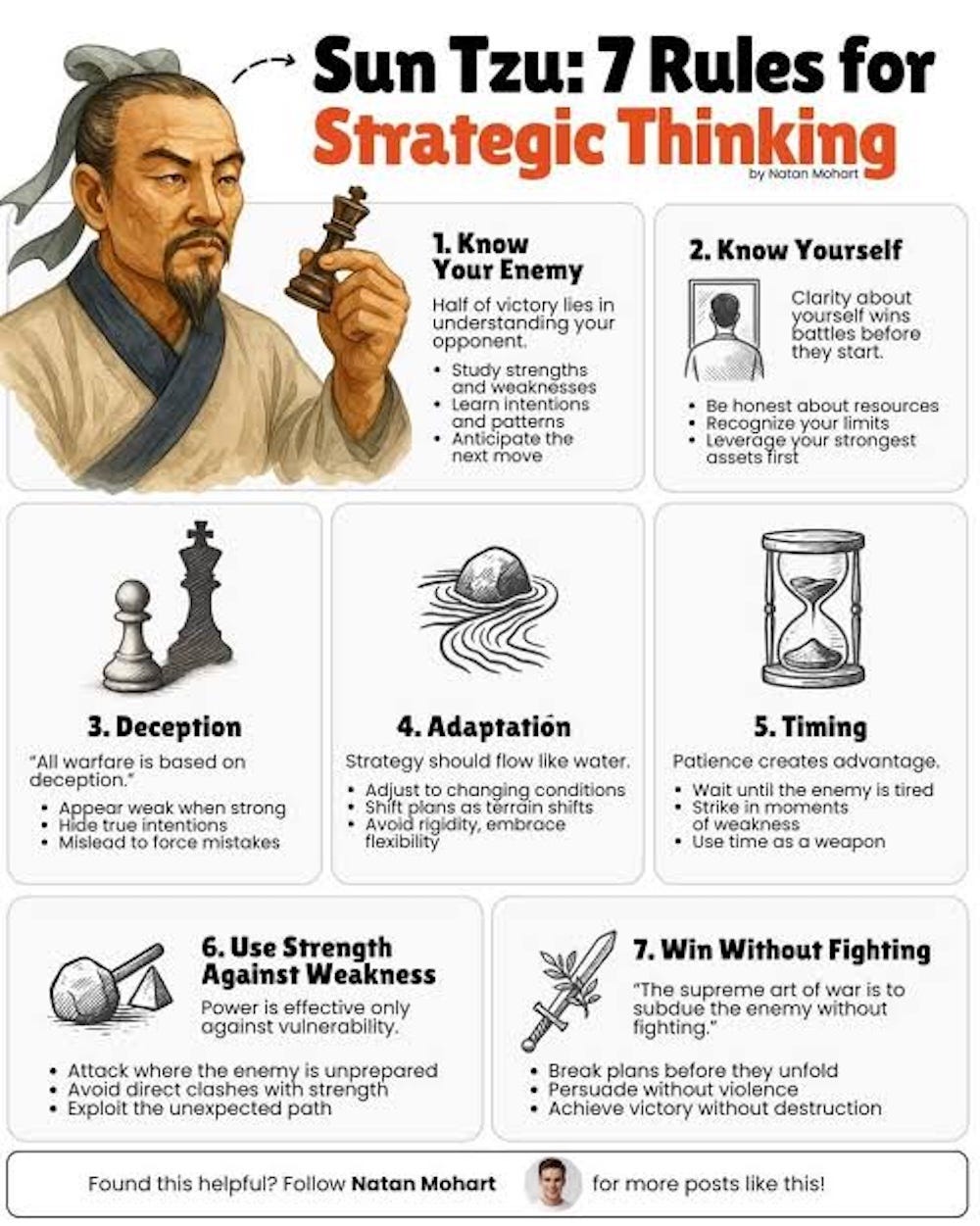
The wisdom below is ancient!


James Roguski
310-619-3055
My Story

JamesRoguski.substack.com/archive
All support is deeply appreciated.
CLICK HERE TO DONATE

Those that say we need to allow SRM and regulate it must not understand the implications. Has the FDA been successful? No, "foods" are now less healthy and more ultra processed than they've ever been. Has the EPA protected the enviroment? No, it allows corporations to destroy entire ecosystems for profit while it goes after the little guy. Has the CDC protected Americans health? No, Americans are sicker and more "medicated" than they've ever been. Have any of the numerous acronym agencies actually made the lives of average Americans better? Or are they used as cudgels to beat the average citizen down with? Would another agency with a new acronym or an existing one with new powers make SRM any better? History says NO. It would simply give corporations another avenue of bribery and regulatory capture. It would allow the official creation an entirely unnecessary industry. And simply compound the already existing problem of geoengineering start-ups lobbying the government for money. Money it doesn't have in the first place. (Trillions in debt) When will people learn; all regulatory agencies do is legalize the actions of big guys (corporations) and stifle the little guys (all of us). Every single one of them have failed to conform to their stated purpose. How is more regulation the answer to an already vastly overregulated nation? An outright ban is the far safer, much more simplified option. The nation already has numerous law enforcement agencies and aviation regulators that would be responsible for enforcing an outright ban. No need to create any new ones. The risks of SRM, which are MANY, would be mitigated. There are no good reasons to employ geoengineering. Those who desire to make money doing it should "get a real job" so to speak. And stop trying to get the government to allow them to further destroy the Earth for profit.
Blessings and appreciation from Sydney Australia.