

Same Bullshit
Different Globalist Organization
Same Media Silence
If any of my readers recall my extensive reporting on the World Health Organization negotiations regarding the amendments to the International Health Regulations and the (still ongoing) negotiations regarding the Pandemic Agreement, please recognize that the very same type of shenanigans are involved in these negotiations involving geoengineering and the Convention on Biological Diversity.

Did you get the memo?
The 17th Convention of the Parties of the CBD is currently meeting in Yerevan, Armenia (from October 19 to October 30, 2026).
Part of the discussions involve potential changes to the 16 year old de facto moratorium on “geoengineering” (marine cloud brightening and stratospheric aerosol injection).
Who is representing your interests at these global negotiations?


All of the information below is subject to change.
Accurate information about the ongoing negotiations has been extremely difficult to obtain. The outcome of the negotiations cannot be determined at this point in time. Final documents should be made available after the 17th Conference of the Parties of the Convention on Biological Diversity in Yerevan, Armenia concludes on October 30, 2026.
https://www.cbd.int/conferences/2026
The Negotiating Dynamic
The current atmosphere in Yerevan, Armenia involves African nations, Small Pacific Island Nations such as Vanuatu and Fiji, and civil society organizations pushing hard to close loopholes that are supported by private startup companies, while pro-technology and oil producing nations seek to block any language that explicitly penalizes or prohibits national research funding into solar radiation modification or carbon dioxide removal technologies.
Because the Convention on Biological Diversity operates by consensus among its 196 Parties (including the EU), suggested text that is introduced by any single delegate can significantly prolong negotiations. In formal UN negotiations, this process is known as introducing “brackets” or “bracketed text variants.” These [brackets] define the details about issues in which agreement has not yet been reached.
A clear split has emerged between the above mention coalition blocs in the current meetings in which the ongoing discussions are divided in regards to changes proposed to two previous decisions:
1. Marine Cloud Brightening and Coral Reefs
CBD Decision XVI/17 is an official resolution titled “Conservation and sustainable use of marine and coastal biodiversity and of island biodiversity.” It was adopted on November 1, 2024, during the 16th Conference of the Parties to the CBD.
https://www.cbd.int/doc/decisions/cop-16/cop-16-dec-17-en.pdf
The original foundational decision from October 29, 2010, (Decision X/33, paragraph 8(w)) currently allows for a narrow exemption for “small-scale scientific research studies” under strict conditions.
8(w) Ensure, in line and consistent with decision IX/16 C, on ocean fertilization and biodiversity and climate change, in the absence of science based, global, transparent and effective control and regulatory mechanisms for geo-engineering, and in accordance with the precautionary approach and Article 14 of the Convention, that no climate-related geo-engineering activities that may affect biodiversity take place, until there is an adequate scientific basis on which to justify such activities and appropriate consideration of the associated risks for the environment and biodiversity and associated social, economic and cultural impacts, with the exception of small scale scientific research studies that would be conducted in a controlled setting in accordance with Article 3 of the Convention, and only if they are justified by the need to gather specific scientific data and are subject to a thorough prior assessment of the potential impacts on the environment;
https://www.cbd.int/doc/decisions/cop-10/cop-10-dec-33-en.pdf
Variant A: Seeks to close the loophole by interpreting the 2010 Decision strictly, arguing that even “localized” marine cloud brightening experiments can cause unpredictable localized weather disruption and harm marine genetic diversity.
Variant B: Attempts to maintain the loophole/exemption for “strictly controlled, small-scale scientific research” aimed at ecosystem adaptation, provided there is thorough prior environmental risk assessment.
The Contentious Bracketed Text:
“...Urges Parties to prevent the deployment of marine geoengineering techniques [including localized interventions for coral reef preservation], unless full environmental impact assessments are completed and a transparent global regulatory framework is established...”
Civil society groups want the bracketed text to be inserted in order to ensure that substantial “experiments” (like spraying seawater to create clouds over reefs) are not allowed to violate the de facto moratorium.
Pro-technology Parties are pushing to prevent the bracketed reference from being added to prevent localized interventions, attempting to maintain the current loophole by introducing a counter-variant that explicitly permits “localized, climate-resilient ecosystem intervention trials.”
The Real-World Catalyst for the "Registry" Dispute
The intense pressure from Pacific Small Island Developing States and anti-geoengineering civil society organizations to implement a centralized public registry for outdoor open-air experiments is driven by recent uncoordinated, small-scale outdoor trials conducted by private startups.
Groups like the CBD Alliance argue that these startups rely on regulatory gray areas to conduct marine cloud brightening (MCB) and solar radiation modification (SRM) field tests before local oversight can intervene.
2. Solar Radiation Modification
CBD Decision XVI/22 is an official resolution titled “Biodiversity and Climate Change.” It was also adopted on November 1, 2024, during the 16th Conference of the Parties to the CBD.
“20. Invites, in line with paragraph 9 of decision XI/20, Parties, other Governments, observers and relevant organizations to provide information on measures undertaken at the national or other level, as appropriate, in relation to paragraph 8 (w) of decision X/33 or decision IX/16 C, and requests the Executive Secretary to compile the information submitted and to make it available through the clearing-house mechanism.”
https://www.cbd.int/doc/decisions/cop-16/cop-16-dec-22-en.pdf
Enforcement vs. Voluntary Reporting
The primary battleground within the contact groups centers on bracketed text within the documents, which are proposals that have not yet been agreed upon by consensus, regarding…
how strictly to monitor or enforce the de facto moratorium
whether to explicitly name specific outdoor deployment risks.
Delegates are debating the exact scope of the mandate given to the CBD Executive Secretary. While Paragraph 20 currently invites a voluntary information-exchange through the clearing-house mechanism, environmental coalitions are pushing for an independent, active global repository to track un-vetted outdoor solar radiation modification (SRM) and atmospheric interventions.
Currently, Decision XVI/22, paragraph 20, invites the voluntary submission of information from Parties, other governments, observers, and relevant organizations and directs the Executive Secretary to compile submissions through the clearing-house mechanism. A proposed registry of outdoor experiments would be a distinct additional mandate;
The Contentious Bracketed Text:
“...Requests the Executive Secretary to [establish a centralized, public registry to track all active and proposed outdoor open-field climate modification experiments] / [compile voluntary submissions from Parties regarding national regulatory measures] with a view to enhancing transparency...”
Pacific Island nations and environmental coalitions are pushing for text that directs the Secretariat to establish an active, public global repository or registry of unauthorized outdoor solar radiation modification (SRM) and marine cloud brightening experiments.
Civil society groups are fighting to insert the bracketed text demanding a centralized public registry. They argue that private startups leverage a “lack of disclosure” to conduct open-air operations before local governments notice.
Larger industrialized nations are trying to water this down to a voluntary “information-sharing exercise,” arguing that the CBD does not have the enforcement infrastructure to act as a regulatory policing body over private tech startups. These pro-tech states are actively fighting to remove the registry wording, substituting it with language that favors voluntary reporting, which would effectively limit the CBD’s oversight capability to voluntarily self-reported, state-approved data.
In the omnibus draft text under Ecosystem-Based Approaches and Safeguards, a major sticking point is whether to explicitly name the risks of specific geoengineering modalities such as stratospheric aerosol injection or cirrus cloud thinning or to stick to generic terminology.
Draft variants of the precautionary text that is supported by the African Group & G77 contain phrases such as:
“...urges Parties to completely avoid adverse climate geoengineering impacts and strictly regulate localized atmospheric or marine interventions that pose transboundary risks to biodiversity and indigenous territories.”
The opposing text that is promoted by Saudi Arabia and other pro-fossil fuel and pro-technology delegations successfully scrubbed out several strict references to “the potential negative effects of climate geoengineering” in earlier plenary sessions.
They favor variations that omit specific risks, preferring text that leaves room for carbon markets and technological abatement mechanisms.
WHAT COULD POSSIBLY GO WRONG? - CLICK HERE

Tuvalu, speaking for Pacific Small Island Developing Nations, emphasized ocean warming, acidification, sea-level rise, cooperation with the UNFCCC, and relevant international advisory opinions.
Saudi Arabia and the UAE emphasized the separate mandates of the Rio conventions and opposed reference to an ITLOS advisory opinion.
The UK said the road map should not create new financing obligations.
https://enb.iisd.org/un-biodiversity-conference-cbd-cop17-daily-report-19oct2026

Who is Participating?
The African Group & G77
This large voting bloc strongly objects to any text that leaves room for unilateral outdoor experimentation. They are pushing for explicit language that binds state parties to actively regulate or penalize domestic private entities attempting unauthorized solar radiation modification (SRM) or ocean fertilization.
Pacific Small Island Developing States
Led prominently by nations like Vanuatu and Fiji, this group views solar and marine geoengineering as an existential transboundary threat. They have championed the text to enforce strict regulations on any outdoor deployment, citing direct risks to marine genetic diversity and localized weather patterns.
The Pro-Strict Moratorium Civil Society Organizations
This coalition aligns closely with civil society networks (such as the ETC Group, the Hands Off Mother Earth! Alliance and CBD Alliance ) to completely eliminate open-field testing.
The Technological/Pro-Research Bloc
(Pro-Loopholes / Weakening the Text)
This faction seeks to protect domestic research budgets, keep options open for carbon markets, and shield private commercial innovation from international regulatory restriction.
Industrialized nations are actively fighting language that creates new financial obligations or mandates for the CBD Secretariat.
Saudi Arabia
Consistently acting as the most vocal opponent to strict precautionary phrasing, at the previous COP16 in Cali, Colombia, Saudi Arabia repeatedly blocked specific text regarding the “negative or irreversible risks” of geoengineering during plenary sessions. They favor language that emphasizes carbon dioxide removal (CDR) through market-based mechanisms and technological carbon capture rather than restrictions on atmospheric intervention.
The United States (Non-Party Observer Presence)
While the United States is one of the few UN members that is not a formal party to the CBD (along with the Vatican), its delegation exercises considerable influence behind the scenes. Its positioning aims to ensure that international text does not limit the operational freedom of private carbon-removal or atmospheric-science startups operating globally.
International Council for Local Environmental Initiatives
ICLEI—Local Governments for Sustainability
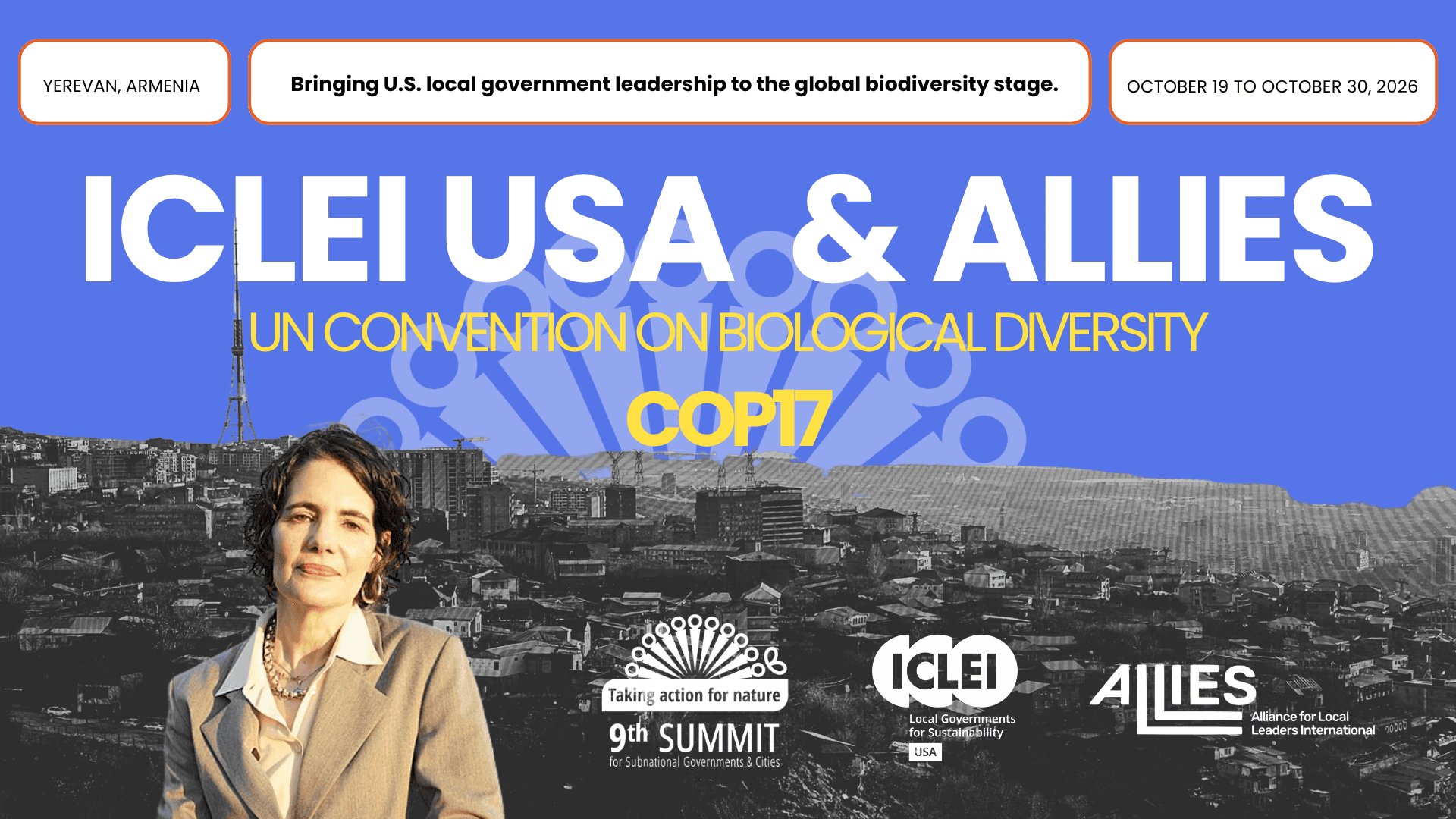
Though the US has not ratified the Convention on Biological Diversity, approximately 50 American mayors, council members, county leaders, state representatives, and regional officials are going, because they’ve concluded they can’t afford to wait for Washington to close that gap. With support from ICLEI – Local Governments for Sustainability USA (ICLEI USA), California Global Biodiversity Alliance, and the Alliance for Local Leaders International (ALLIES), Ambassador (ret.) Nina Hachigian, CEO of ALLIES and ICLEI USA Advisor on Local Diplomacy, will lead a delegation of 50 local elected officials from across the U.S.
The article does not establish USCIB advocacy for SRM, opposition to a registry, or support for MCB experiments.
The United States Council For International Business
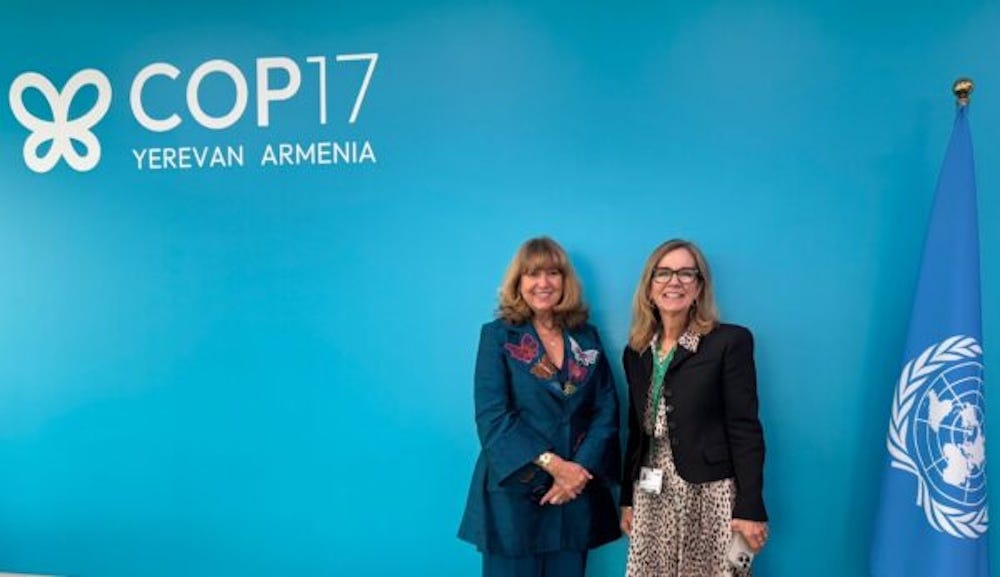
USCIB Leads US Business Delegation to UN Biodiversity COP17
On the first day of COP17, Whitney Baird, President and CEO at USCIB, met with Astrid Schomaker, Executive Secretary of the CBD to discuss the importance of meaningful private sector engagement and participation in the UN biodiversity process, especially as it relates to the Cali Fund for access and benefit sharing on digital sequence information.
https://uscib.org/uscib-leads-us-business-delegation-to-un-biodiversity-cop17/
The article does not establish USCIB advocacy for SRM, opposition to a registry, or support for MCB experiments.

Daily reports:
October 26,2026 Highlights and Images
October 23, 2026 Highlights and Images
October 22, 2026 Highlights and Images
October 21, 2026 Highlights and Images
October 20, 2026 Highlights and Images
October 19, 2026 Highlights and Images
Documents
https://www.cbd.int/conferences/2026/cop-17/documents#in-session
https://www.cbd.int/conferences/2026/cop-17/documents#in-session%2Fwg1
https://www.cbd.int/conferences/2026/cop-17/documents#in-session%2Fwg2
https://www.cbd.int/conferences/2026/cop-17/documents#statement
https://www.cbd.int/conferences/2026/cop-17/documents#official
https://www.cbd.int/conferences/2026/cop-17/documents#information



James Roguski
310-619-3055
My Story

JamesRoguski.substack.com/archive
All support is deeply appreciated.
CLICK HERE TO DONATE

Blessings to you n yours James.
From Sydney Australia.
Thanks James for this excellent and important article.
It seems so much has bogged down regarding the environment and yet waves get created to protect the skies.